

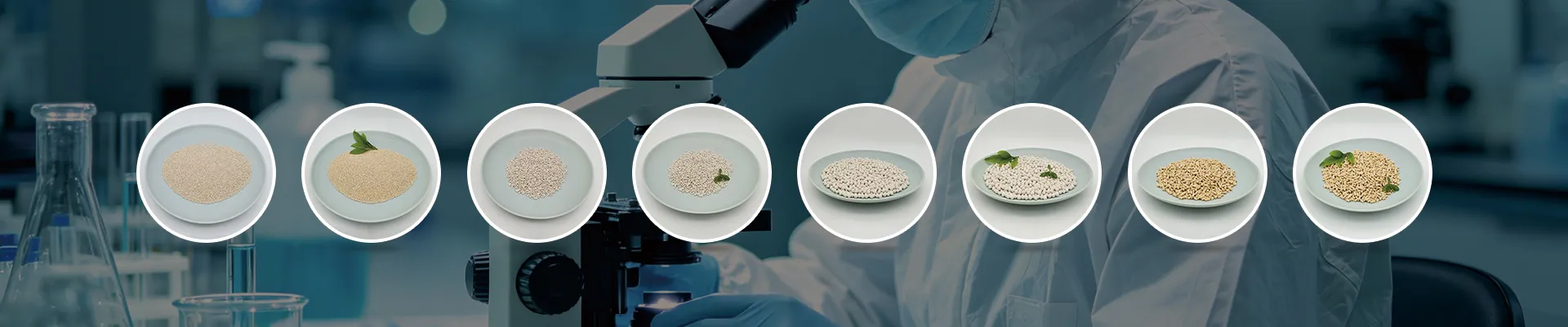
Zeolite molecular sieves have attracted great attention in recent years as stabilizers in the plastics industry, such as polyvinyl chloride (PVC) and polypropylene (PP). They are typically used to inhibit degradation reactions and enhance thermal stability, thereby extending service life.
PVC Zeolite Stabilizer
PVC is inherently sensitive to heat, of poor thermal stability, and prone to degradation at high temperatures. Thermal stabilizers are needed to prevent the decomposition, discoloration, and mechanical property loss of PVC material.
PVC releases hydrogen chloride when exposed to heat, which is the direct factor causing PVC to darken in color and deteriorate in performance. So the thermal stabilizers are responsible for the neutrality of hydrogen chloride and the inhibition of chain degradation.
Zeolite molecular sieves have the ability to adsorb hydrogen chloride, and can also work in synergy with calcium or zinc stabilizers to enhance the overall thermal stability of PVC, and improve the initial discoloration and long-term aging problems of PVC.

PP Zeolite Stabilizer
PP is susceptible to oxidation, thermal cracking, or photodegradation, and thus requires the addition of antioxidants and heat stabilizers. Especially in filled masterbatches and recycled materials, impurities (water, acids) will accelerate the degradation process.
Zeolite molecular sieves absorb residual water in PP system to improve the processing stability, absorb acidic impurities such as peroxides and organic acids to enhance antioxidant properties, and can also work in synergy with other additives to block the transmission of heat and oxygen, thereby extending the service life of PP.
As PP stabilizers or fillers of PP composite, molecular sieves do not migrate or volatilize, have good thermal stability, and can be mixed with inorganic fillers or additives to improve the performance of PP materials.
Zeolite Molecular Sieves For PVC/PP Stabilizers
Zeolite molecular sieves that can be used for PVC/PP stabilizers include type A, P, X and Y. However, type A molecular sieve (e.g. 4A zeolite powder) is more suitable due to its using effect and cost-effectiveness.
Type 3A zeolite molecular sieve: It is often used as desiccants to absorb moisture in PVC or PP systems. It also has a certain effect on capturing free acids (such as trace acids produced by oxidative degradation) in PP systems.
Type 4A zeolite molecular sieve: In PVC stabilizers, it absorbs small molecules of hydrogen chloride, preventing degradation reactions and improving thermal discoloration. In PP stabilizers, it absorbs moisture and acidic impurities, enhancing processing stability and reducing degradation rates.
Type 5A zeolite molecular sieve: It absorbs hydrogen chloride and impurity molecules released during PVC processing, and it is mainly used to improve adsorption capacity and temperature resistance.
Type 13X zeolite molecular sieve: It has a larger adsorption capacity and can absorb hydrogen chloride, sulfur dioxide, and other acidic gases. It is generally used in specific PVC additive systems or as a composite stabilizer carrier.