

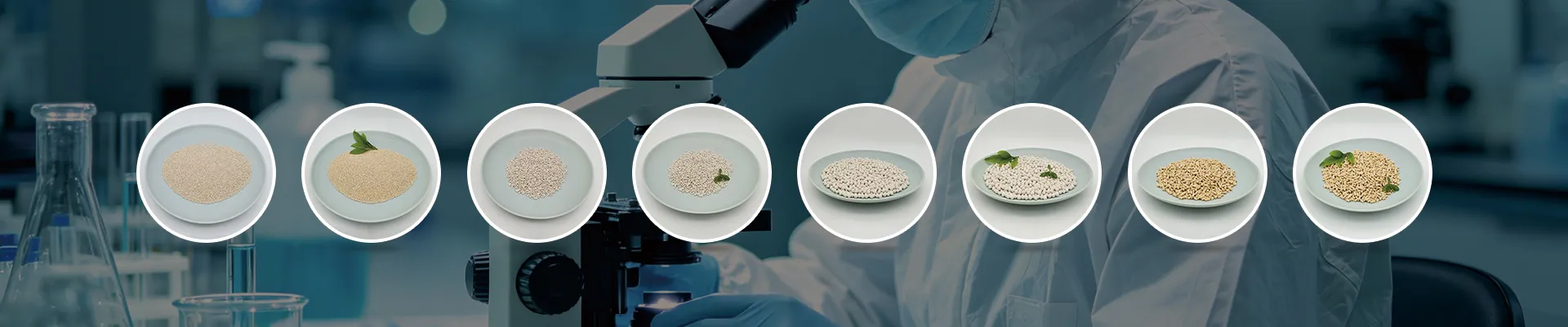
As an effective desiccant and adsorbent, both powder form and granular form zeolite molecular sieves can be applied to insulating glass (or double hermetic glass, DVH) spacers. They can absorb moisture and residual organic matter, to keep the glass smooth and transparent, and to reduce the strong internal and external pressure difference due to huge temperature changes.
Why Choose Desiccants For Insulating Glass Spacer?
The insulating glass requires a spacer or space bar, and the spacer is the skeleton of an IGU (Insulating Glass Unit), which supports and separates the two panes of glass in a window. The spacers can be plastic, metal or foam, bonded with sealing materials to create an airtight cavity that prevents air and moisture from entering the space between the panes.

Usually, the internal space of the insulating glass is filled with air or argon, but a small amount of moisture will inevitably remain during the sealing process. So the insulating glass desiccant needs to be filled into the spacer, to absorb residual moisture and organic substances in the air or inert gas, thereby avoiding fogging and mold on the inner surface of the glass, and reducing the thermal insulation performance.
Zeolite Desiccant In Aluminum Spacers
Aluminum spacer is a popular application in insulating glass unit. Aluminum spacers feature excellent verticality, distortion resistance, and a smooth, flat surface, which can maintain outstanding moisture tightness and air tightness.
Aluminum spacers are made of aluminum alloy, and serve as containers for zeolite molecular sieves. The molecular sieves come into contact with the air inside the insulating glass through the holes on the aluminum spacers, and continuously adsorb residual moisture.
The molecular sieves used in aluminum spacers are usually micro spheres. They are filled into the the aluminum spacers during the production process of insulating glass, to ensure the drying effect and avoid fogging and frost.
Zeolite Desiccant In Warm Edge Spacers
Warm edge spacer is an innovative solution in insulating glass unit. Warm edge spacers have low thermal conductivity, excellent condensation resistance, and improved fire resistance, which are particularly suitable for cold regions or scenarios with high energy-saving requirements.
Warm edge spacers are made of composite materials, including modified plastic, butyl, silicone and metal. And the molecular sieves may be blend into the composite materials, or be stored in the spacers as aluminum spacers.
The molecular sieves used in warm edge spacers are zeolite activated powders, spheres or pellets, most of which are pre-filled and some are integrally formed, to keep the insulating glass drying, thermal resistant and structurally stable.
Zeolite Types For Insulating Glass Desiccant
Type 3A zeolite molecular sieve is the best choice for insulating glass desiccant, and it is the standard desiccant in the insulating glass industry. 3A molecular sieve absorbs water with high selectivity without affecting the sealant, and has a large adsorption capacity and a long service life.
Insulating glass also uses type 4A zeolite molecular sieve as a desiccant. Although 4A molecular sieve has a faster adsorption rate, it easily adsorbs carbon dioxide and organic matter, which may cause the sealant to fail and shorten the life of the insulating glass. Therefore, it is not a preferred option.