

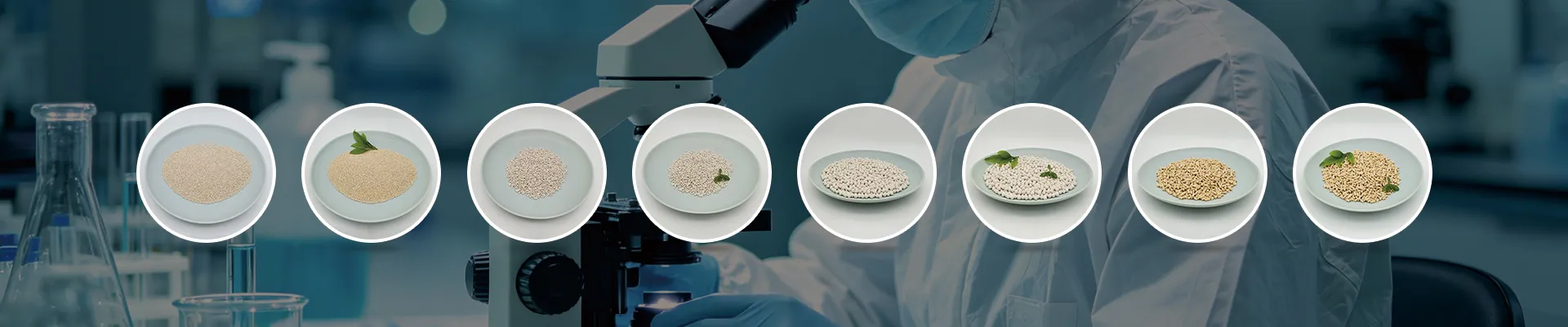
Zeolite molecular sieves play a crucial role in natural gas processing by performing key purification functions (such as dehydration, desulfurization, and decarbonization etc.) through selective adsorption, therefore improve the quality of natural gas and ensure safe transportation.
Natural Gas Dehydration
Natural gas is produced with water vapor, and even carries a certain amount of liquid water. The presence of water in natural gas is a very negative thing, which make natural gas dehydration a necessity. For example:
Water and methane form ice-like solid hydrates under low temperature and high pressure (such as in pipeline transportation or liquefaction processes), which can clog valves, pipelines, and equipment, causing transportation interruptions.
Water reacts with hydrogen sulfide or carbon dioxide in natural gas to produce acidic substances (sulfuric acid, carbonic acid), which accelerates the corrosion of metal pipes and equipment and shortens their service life.
When natural gas needs deep cooling, as liquefied natural gas (LNG) needs to be cooled to -162°C, the residual moisture will freeze and damage key equipment such as the cryogenic heat exchangers.
Molecular sieves, with their uniform pore size, preferentially adsorb water molecules. The water adsorption capacity is as high as 22% of their own weight, which can reduce the dew point of natural gas to below -70°C and achieve deep dehydration.

Natural Gas Sweetening
Natural gas sweetening is the process of desulfurization and decarbonization. The hydrogen sulfide and carbon dioxide in natural gas can form acids (with water), and cause corrosion in pipelines and equipments. Hydrogen sulfide is also a toxic gas that affects health and safety.
Molecular sieve is aimed to remove hydrogen sulfide and carbon dioxide to the PPM or even PPB level. This helps to reduce corrosion, increase the calorific value, and meet the commercial standards of natural gas in quality and transportation.
In addition to inorganic sulfur, molecular sieves can also adsorb organic sulfur such as methyl mercaptan, ethyl mercaptan, propyl mercaptan, methyl sulfide, and thiophene, all thanks to their large specific surface area and pore volume.
Zeolite Molecular Sieves For Natural Gas Processing
Type 3A zeolite molecular sieve: Its pore size is 3Å, and it is mainly used to adsorb water molecules with a diameter of approximately 2.8Å. It can efficiently remove moisture from natural gas while avoiding the adsorption of hydrocarbons, making it suitable for natural gas dehydration.
Type 4A zeolite molecular sieve: Its pore size is 4Å, and can selectively adsorb water molecules (diameter 2.8Å). It maintains a high adsorption capacity at high temperatures and is suitable for deep drying of natural gas. However, it should be noted that it may adsorb some light hydrocarbons.
Type 5A zeolite molecular sieve: Its pore size is 5Å, and it can be used in natural gas processing for adsorption of water, light hydrocarbons, carbon dioxide, hydrogen sulfide, mercury, etc. For instance, removing trace amounts of hydrogen sulfide from a mixture of methane and carbon dioxide.
Type 13X zeolite molecular sieve: Its pore size is 10Å, and it has a strong adsorption capacity for carbon dioxide, can efficiently adsorb sulfur compounds such as hydrogen sulfide and mercaptans, remove impurities such as heavy hydrocarbons and aromatic hydrocarbons in LNG plants.