

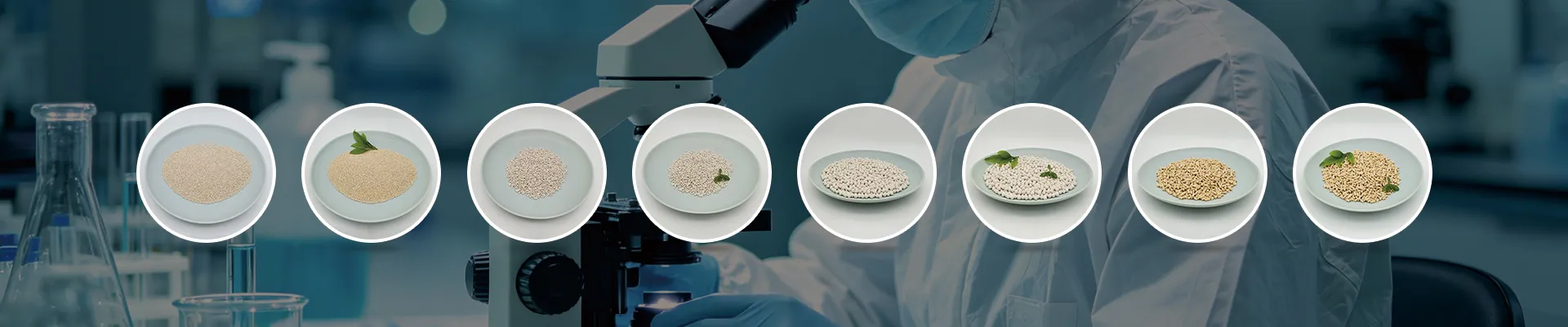
Zeolite molecular sieves can be applied to dehydrate electrolytes through physical adsorption, avoiding the negative effects of water and thereby improving the performance and safety of the lithium battery, which has attracted increasing attention recently.
Constituents Of Common Lithium Electrolytes
Organic solvents are the main constituent of the electrolyte, accounting for about 80%~90%. These solvents include ethylene carbonate (EC), dimethyl carbonate (DMC), propylene carbonate (PC), diethyl carbonate (DEC), ethyl methyl carbonate (EMC), etc.
Lithium salt is another constituent of the electrolyte and is the core lithium source. These lithium salts include lithium hexafluorophosphate (LiPF6), lithium bis(fluorosulfonyl)imide (LiFSI), lithium tetrafluoroborate (LiBF₄), lithium perchlorate (LiClO₄), etc.
Additives account for about 5% of the electrolyte. These additives include film-forming additives, flame-retardant additives, stabilizers, etc. For instance, common film-forming additives such as vinyl carbonate (VC), fluorinated vinyl carbonate (FEC).

Overall, the performance of the lithium electrolyte depends on the synergistic effect of the solvents, lithium salt and additives. For example, the combination of EC/DMC mixed solvent and LiPF6 can balance both ionic conductivity and stability.
Impacts Of Water Presence In The Electrolytes
Those constituents are extremely sensitive to electrochemical performance, water and impurities can severely affect the production and quality of the lithium batteries. For example:
Water can react chemically with lithium salts in the electrolyte to produce harmful substances such as hydrofluoric acid (HF) and lithium fluoride (LiF), which can damage the battery structure, cause leakage or short circuits, and reduce battery capacity.
The solid electrolyte interface (SEI) film formed by the film-forming additives can be damaged by the water, losing its density and uniformity, which leads to an increase in the internal resistance of the battery and a decrease in the discharge capacity.
During charging and discharging, water can decompose to produce gases (such as CO₂ and H₂), which increases the internal pressure of the battery. This may lead to the battery bulging, leakage of liquid, and even smoking, fire, and explosion, posing a safety threat.
The hazards of water mentioned in solvent treating also exist in the electrolyte. In summary, water presence affects electrolyte conductivity, electrolyte interface stability, and battery cycle life and safety, it is a key control factor in the production and use of lithium batteries.
Molecular Sieves For Electrolyte Dehydration
The applications of molecular sieves in electrolytes vary depending on their specific purposes, such as solvent drying, electrolyte dehydration and deacidification, electrolyte regeneration, and enhancement of electrochemical performance.
Type 5A Zeolite Molecular Sieve is the most favored for electrolyte dehydration, and it can effectively remove water from the electrolyte, preventing increased internal resistance and electrochemical reactions, thereby improving the performance and safety of the lithium battery.
Type 3A, 4A, 13X, β type, lithium type, and composite zeolite molecular sieves can be selectively applied to the lithium electrolytes. By leveraging their strong adsorption, ion sieving property and structural stability, to improve the purity, stability and cycling performance of the electrolytes.